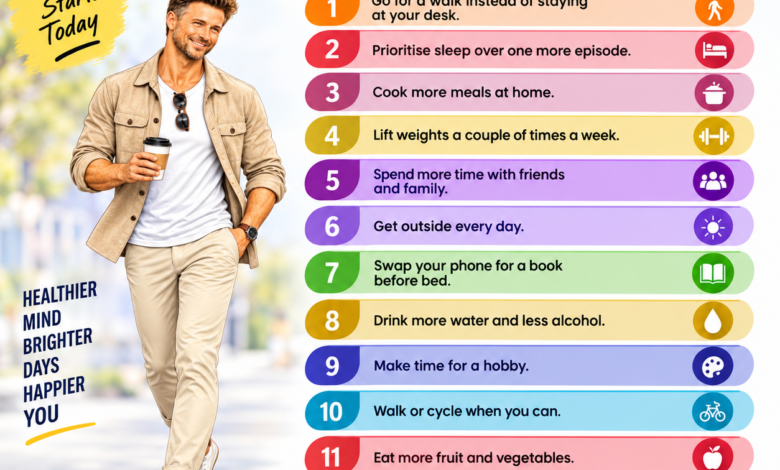
12 Daily Decisions That Can Make You Happier, Healthier, and More Productive
The Problem: We Often Choose Immediate Comfort Over Long-Term Wellbeing
Modern life makes unhealthy choices extremely convenient.
We sit at our desks instead of walking. We sacrifice sleep for another episode. We scroll through our phones before bed. We rely heavily on convenience food. We stay indoors for most of the day. We become too busy for hobbies, family, exercise, and recovery.
Individually, these decisions may appear insignificant. But repeated hundreds of times during the year, they become habits—and our habits eventually influence our health, productivity, relationships, and quality of life.
The solution is not trying to transform everything overnight.
It is making slightly better decisions more consistently.
12 Better Decisions for a Happier Life
1. Choose Movement Instead of Remaining at Your Desk
Long periods of sitting can leave you feeling physically and mentally drained.
Instead of remaining seated continuously, introduce short movement breaks throughout your working day.
Walk during a phone call, take the stairs, stretch between meetings, or spend 10 minutes walking after lunch.
Simple rule:
Aim to move for a few minutes every hour.
KPI: Daily steps or active minutes.
2. Protect Your Sleep
One more episode, another social-media session, or another late-night email may feel harmless.
But repeatedly sacrificing sleep can affect concentration, energy, decision-making, mood, and work performance.
Create a relatively consistent bedtime and reduce unnecessary screen time before sleeping.
KPI:
Sleep Consistency Rate = Days achieving your sleep target ÷ Total days × 100
Target example: ≥ 80%
3. Prepare More Meals at Home
Home-prepared meals usually give you greater control over ingredients, portions, vegetables, protein, sugar, salt, and overall food quality.
You do not need to prepare every meal yourself. Start by replacing a few highly processed or takeaway meals each week.
KPI: Home-cooked meals per week.
Example target: 5–10 meals weekly
4. Add Strength Training to Your Week
Walking is excellent, but strength training provides additional benefits.
Resistance exercises help maintain muscle, strength, physical function, and general fitness.
This does not necessarily require a gym. Bodyweight exercises, resistance bands, or weights can all work.
KPI: Strength-training sessions per week.
Practical target: 2+ sessions per week, adjusted for your fitness and medical circumstances.
5. Invest in Relationships
Career growth matters—but relationships matter too.
Make deliberate time for people who are important to you.
Have dinner together. Call a family member. Meet a friend. Give someone your full attention instead of checking your phone during the conversation.
One hour of genuinely focused connection can be more valuable than several hours of distracted presence.
KPI: Meaningful social interactions per week.
6. Spend Time Outside
Many professionals move between the house, car, office, and shopping centre while spending surprisingly little time outdoors.
Outdoor activity can encourage movement, provide a change of environment, and create valuable psychological separation from work.
Try a morning walk, outdoor lunch, evening walk, or weekend activity.
KPI: Outdoor minutes per day.
Example target: 20–30 minutes
7. Replace Some Screen Time With Reading
Your phone is designed to compete for your attention.
Instead of eliminating technology, intentionally redirect part of your entertainment time toward reading, learning, reflection, or personal development.
A simple rule can be:
Book before phone at bedtime.
Even ten pages every evening can become several books per year.
KPI:
- Daily reading minutes
- Books completed per quarter
- Non-essential screen-time reduction
8. Drink More Water and Reduce Alcohol
Hydration supports normal physical and cognitive functioning, while excessive alcohol can negatively affect sleep, health, recovery, and judgment.
Instead of obsessing over a universal number of glasses, build simple hydration habits appropriate to your needs and environment.
For example:
Water after waking → water with meals → water during work → water around exercise.
KPI: Percentage of days meeting your personal hydration target.
For alcohol, less is generally better for health.
9. Make Time for a Hobby
Your identity should not be limited to your job title.
Hobbies provide opportunities for creativity, relaxation, learning, social connection, and enjoyment.
This could include photography, gardening, reading, cooking, football, painting, fishing, woodworking, music, or learning a language.
The specific hobby matters less than having something you genuinely enjoy.
KPI: Hobby hours per week.
Example target: 2+ hours
10. Walk or Cycle When Practical
Not every journey requires a car.
For short and safe distances, walking or cycling can combine transportation with physical activity.
Think about opportunities such as nearby shops, parks, schools, cafés, or community facilities.
KPI: Active-transport trips per week.
11. Increase Fruit and Vegetable Consumption
Rather than focusing only on foods you should eliminate, focus on adding nutritious foods.
A simple strategy:
Add vegetables or fruit to every major meal whenever practical.
The objective is not perfection—it is improving your average eating pattern.
KPI: Fruit and vegetable servings per day.
12. Protect Your Weekends and Recovery Time
One of the biggest problems in modern professional life is that work increasingly occupies personal time.
Emails continue at night. Messages arrive during weekends. Work problems follow people home.
Sustainable performance requires recovery.
Create boundaries between professional responsibilities and personal life wherever your role allows.
Use weekends or rest days for family, exercise, hobbies, reflection, social connection, and recovery.
KPI: Percentage of planned personal/rest time protected from unnecessary work.
The Better Framework: Measure Balance, Not Just Happiness
Instead of asking:
“Am I happy today?”
Ask:
“Am I consistently doing the things that increase my chances of living well?”
A practical personal wellbeing dashboard could track:
| KPI | Suggested Measurement |
|---|---|
| 😴 Sleep Consistency | ≥80% of target nights |
| 🚶 Daily Movement | Steps / active minutes |
| 🏋️ Strength Training | ≥2 sessions weekly |
| 🥗 Nutrition | Fruit & vegetable servings |
| 💧 Hydration | % days meeting target |
| 👨👩👧 Relationships | Meaningful interactions/week |
| 🌳 Outdoor Time | Minutes/day |
| 📚 Learning | Reading minutes/week |
| 📱 Screen Control | Non-essential screen hours |
| 🎨 Personal Interests | Hobby hours/week |
| 🧘 Recovery | Protected rest hours |
| 😊 Wellbeing | Weekly self-rating 1–10 |
A Simple Personal Wellbeing Score
You can even create a monthly measurement:
Wellbeing Habit Score = Completed Healthy Habits ÷ Planned Healthy Habits × 100
Example:
You planned 120 healthy actions during the month and completed 96.
96 ÷ 120 × 100 = 80%
That gives you something far more useful than simply saying:
“I need to be happier.”
Start Small: The 3–3–3 Method
Trying to adopt all 12 habits immediately may cause you to abandon the entire plan.
A better approach is to start with three:
3 Health Decisions: sleep, movement, nutrition.
3 Mental Decisions: reading, outdoor time, hobbies.
3 Relationship Decisions: family, friends, protected personal time.
Once these become consistent, add more.
The goal is not a perfect day.
The goal is a better average week.
Final Thought
Your life is shaped not only by the major decisions you make occasionally, but by the small decisions you repeat constantly.
Walk instead of sitting.
Sleep instead of scrolling.
Cook instead of always ordering.
Read instead of endlessly consuming content.
Connect instead of isolating yourself.
Protect your health, your relationships, and your time.
Small decisions → repeated habits → better health → stronger relationships → greater wellbeing → a better life.

